
When H-1B Isn’t Enough: Your Backup Options From Inside the U.S.
What to do if the lottery or transfer falls through, and what paths are still open while you are here.

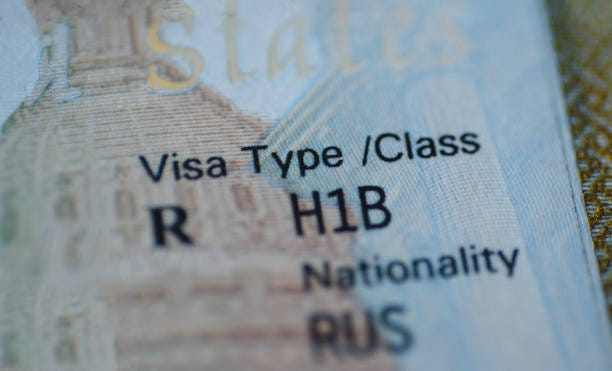
First, we’ll quickly walk through 3 key U.S. immigration updates you should actually care about.
Then we’ll go deep on H-1B backup strategies: what to do if the lottery or a transfer falls through, and which alternative paths you can still pursue without leaving the country.
Finally, we’ll connect this to something bigger - Immigrant Founders Conference on December 3rd, 2025, a global gathering celebrating the vision, resilience, and innovation of immigrant founders.
U.S. Immigration Updates This Week
1. USCIS announces inflation-based fee increases for FY 2026
USCIS has published an alert about inflation-based increases for certain immigration-related fees starting in FY 2026. If you’re planning filings next year (especially employment-based), expect some costs to go up and plan budgets with your employer or attorney accordingly.
2. December 2025 Visa Bulletin: mostly stable, but watch EB categories
The December 2025 Visa Bulletin is out. Employment-based (EB) categories show little to no forward movement on “Dates for Filing,” with EB-1 India and China still facing cut-offs while EB-1 remains current for the rest of the world. If you’re employment-based and close to your priority date, timing your adjustment of status filings remains critical.
3. New H-1B enforcement push: “Project Firewall”
The U.S. Department of Labor has launched Project Firewall, a new enforcement drive focused on H-1B misuse (underpayment, misrepresented roles, and failure to follow layoff rules). This won’t change the rules overnight, but it does mean more scrutiny on some employers, and indirectly, more volatility for workers who rely on H-1B compliance.
This Week’s Main Insight: H-1B Backups
If you’re in the U.S. on F-1, H-1B, or another status, “lottery results” or “transfer denied” can feel like a verdict on your entire future.
A lot of people quietly think:
“If this H-1B plan fails, I’m out of options.”
That’s rarely ever true.
The system is messy and political, but it’s not a single door. Many immigrants who look “stuck on H-1B” actually have 2–3 backup paths they’ve never mapped properly:
Cap-exempt H-1Bs
Extraordinary ability visas
Study/research routes
Long-term green card strategies (that they could start now)
Think in three questions:
What if my first H-1B attempt fails?
What if a transfer or extension is denied?
What other visa types realistically fit my profile while I’m still in the U.S.?
You can’t control every USCIS decision. You can control how early you build alternatives.
Strategy 1: Make your H-1B position less fragile
Sometimes the best “backup” is a more stable H-1B setup:
Look at cap-exempt employers like universities, nonprofits, and some research organizations.
Prefer roles and sectors that are historically more comfortable with sponsorship and compliance.
It’s not glamorous, but stability buys you time to build better options.
Strategy 2: Explore extraordinary ability paths
If you’re in tech, research, AI, design, product, or a founder role, you might be closer to an extraordinary-ability path than you think.
Common building blocks:
Strong compensation or equity versus your peers
Publications, patents, open-source, or technical impact
Speaking, judging, or leadership roles
Press and third-party recognition
These cases require planning, but they’re often the cleanest way out of the lottery cycle for high performers.
Strategy 3: Use study/research timelines strategically
Carefully chosen Master’s, PhD, or research paths can:
Keep you in status (F-1, sometimes J-1)
Give you time to rebuild your profile
Open cap-exempt or research-heavy roles that feed back into stronger H-1B or green card routes
This only works if the program aligns with your long-term plan, not just “I need to stay one more year.”
Strategy 4: Start a long-term green card plan
While you’re fixated on this year’s H-1B, you or your employer might already be in range for:
EB-2 or EB-2 NIW - especially for high-impact work, research, or policy-relevant fields
EB-1A or EB-1B - for top performers and researchers
A well-planned green card strategy doesn’t solve next month’s problem, but it makes every visa scare feel less fatal.
Pro-tip
Try making a simple “status map”:
Write down your current status + end dates.
List 2–3 realistic backup categories (e.g., cap-exempt H-1B, O-1A based on your track record, EB-2 NIW, a specific study/research option).
For each, write one sentence:
“To make this real, I’d need to start doing X in the next 3–6 months.”
That “X” might be tracking metrics, collecting evidence, changing teams, speaking at events, or talking to an attorney.
H-1B is not “make or break.” The people who survive lottery losses and transfer denials aren’t lucky; they’re the ones who had another path half-built already.
San Francisco Connect: Immigrant Founders Conference
If you’re reading this because you’re worried about H-1B, there’s a good chance you’re also thinking bigger: starting a company, building products, or raising capital in the U.S. as an immigrant.
That’s exactly why we’re hosting the Immigrant Founders Conference this December.
Here’s why you should attend:
Hear from immigrant founders who’ve scaled to $1M+ ARR and beyond
Learn from investors backing global and cross-border ventures
Build authentic relationships with founders who’ve turned adversity into opportunity
If H-1B feels shaky and you’re thinking, “Maybe I should just build something of my own,” this event is for you.
For more details, register here:
Sneak Peek
In the following weeks, we are breaking down:
1. Country Comparison Guide
A clear comparison of Canada, the U.K., and Europe so you understand your Plan B (and C) before you ever need it.
2. Jobs, Passports, Taxes, and Companies
A practical guide to job hunting as an immigrant, second-passport options, thinking about global taxes, and building your own company across borders.
3. Side Projects That Actually Help Your Visa Case
The difference between a “nice portfolio project” and something that can support O-1A / EB-1A / NIW.
Your visa shouldn’t be the reason you stop building. Let’s turn backup strategies into a real, long-term plan.
At OpenSphere, we built our evaluations to answer exactly this question:
Given your current visa, background, and goals, what are the realistic paths you can still pursue from inside the U.S., and what would it take to make them viable?
If you want that kind of clarity instead of guesswork, you can start with a free profile evaluation on OpenSphere and get a structured view of your options, not just this year’s lottery result.
Hey, great read as always. Your clear analisys on these complex systems is apreciated.